
Do GLP-1 medications cause gallbladder problems?
By Dr. Amber Elliott | Granite Mountain Surgery
GLP-1 medications have become a common part of weight loss treatment. As more people use them, more patients are asking an important question.
Can these medications cause gallbladder problems?
Dr. Amber Elliott hears that question more often now, and her answer is thoughtful and practical. In many cases, the bigger issue may not be the medication itself. It may be the speed of the weight loss.
That distinction matters. The conversation around GLP-1 medications is easy to oversimplify, and patients deserve a clearer answer than that.

The short answer
Rapid weight loss can increase the risk of gallstones. Dr. Elliott’s view is that this is the more important part of the conversation. In her review of the topic, the stronger pattern is not a simple cause-and-effect from the medication itself. It is the effect of losing weight quickly, which can change bile composition and make gallstones more likely to form.
That is why this issue is not unique to GLP-1 medications. It can happen with other forms of rapid weight loss too.
Why weight loss can affect the gallbladder
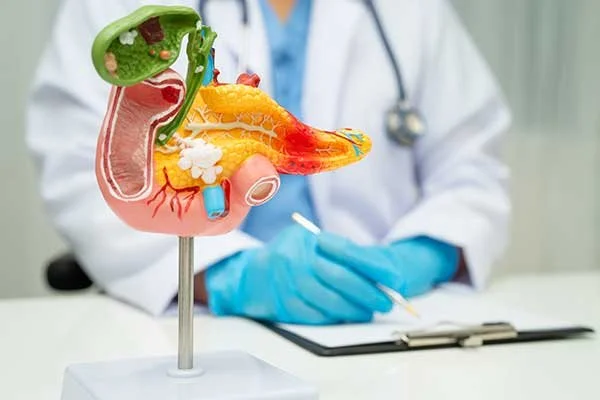
The gallbladder stores bile and helps release it when your body digests fat. When weight comes off quickly, the balance of bile salts, cholesterol, and bile flow can shift. That can create the conditions for gallstones to form. Dr. Elliott explains that this is one reason surgeons have long seen gallbladder issues in patients losing weight quickly after bariatric surgery or other major weight changes.
That does not mean patients should panic or avoid treatment that could improve their health. In fact, Dr. Elliott’s overall message is the opposite. The numerous health benefits of weight loss for patients who are significantly overweight, far outweigh the risks of gallbladder problems.
What symptoms should make you think about your gallbladder
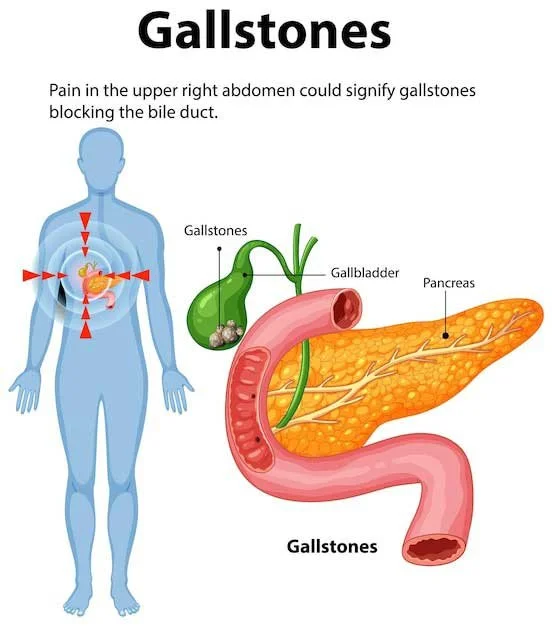
Gallbladder symptoms often start with pain in the upper abdomen. Many people feel it in the middle of the upper belly or under the right ribs. It often shows up after eating, especially after a heavier or fattier meal. Some people notice it 30 minutes after eating. Others feel it a few hours later, and sometimes it wakes them up at night.
Other symptoms can include
nausea
vomiting
bloating
pain that comes and goes
discomfort that gets worse after meals
Early on, some people can avoid attacks by cutting back on fatty foods. Over time, though, symptoms can become less predictable. Dr. Elliott notes that many patients eventually reach the point where it does not seem to matter what they eat. They still have pain.
If you are having these symptoms and wondering what treatment might look like, it may also help to read Do I really need my gallbladder removed.
When symptoms become urgent
Some symptoms should not wait.
You should seek urgent medical care if you have:
severe or unrelenting abdominal pain
fever
yellowing of the eyes or skin
dark urine
pale or white stools
dizziness along with worsening symptoms
unable to tolerate any fluids
These signs can mean the problem has moved beyond a straightforward gallbladder attack and needs immediate evaluation.
Can you lower the risk?
There is no guaranteed way to prevent gallstones during weight loss. Dr. Elliott notes that slower, steadier weight loss may help reduce the risk compared with losing weight very quickly, but there is no perfect trick that makes gallstones impossible. Some people form them and some do not.
That is why awareness matters more than fear. The goal is not to scare people away from getting healthier. It is to help them know what symptoms to pay attention to and when to ask for help.
What to do if you think your gallbladder is the problem
If symptoms are intermittent, the first step is often to talk with your regular doctor. In many cases, an ultrasound is used to look for gallstones and evaluate the gallbladder.
Patients can also call Granite Mountain Surgery, especially if they already have imaging or already know they have gallstones. Dr. Elliott notes that some patients discover stones on earlier scans and only connect the dots later when symptoms start.
If you already know you have gallstones and want to understand when surgery may or may not be needed, read Do I really need my gallbladder removed.
If surgery becomes part of the conversation
For many patients, this is the next concern. What happens if the gallbladder needs to come out?
Dr. Elliott’s guidance is reassuring. Most patients do very well after gallbladder surgery. It is usually a day surgery, and most people recover quickly. In the long term, most do not need major diet changes. Some people notice looser stools after very fatty meals, especially early on, but otherwise life usually returns to normal.
Another common question is whether someone can ever use a GLP-1 medication again after gallbladder removal. Dr. Elliott’s answer is yes. In general, not having a gallbladder is not a contraindication to using these medications. It just means symptoms should still be taken seriously if rapid weight loss is happening.
What patients should take from this
There is a lot of noise around GLP-1 medications right now. What patients need most is context.
Rapid weight loss can increase the risk of gallstones. That risk is real. It is also not unique to GLP-1 medications. Symptoms should be taken seriously, but they should be understood in the bigger picture of your health.
Dr. Elliott puts it in practical terms. The health benefits of meaningful weight loss still matter. People who lose weight experience lower blood glucose, cholesterol, blood pressure, and improved sleep apnea symptoms. All of which significantly improves overall health. Long-term wellness matters much more in helping patients live a long, healthy life than the possibility of a gallbladder issue.
The right approach is not to ignore symptoms, and it is not to panic. It is to stay aware, ask questions early, and get checked if something does not feel right.
Frequently asked questions
-
They can be part of the conversation, but rapid weight loss appears to be a major reason gallstones develop. This same pattern has been seen with other forms of quick weight loss too.
-
Common symptoms include upper abdominal pain, often in the middle or under the right ribs, especially after eating. Nausea, vomiting, and bloating can happen too.
-
They can be. Mild attacks may come and go, but if stones move beyond the gallbladder, the situation can become much more serious.
-
Go right away if you have severe pain, fever, yellowing of the skin or eyes, dark urine, pale stools, or symptoms that are getting worse quickly.
-
Possibly. Dr. Elliott notes that slower, steadier weight loss may help reduce the risk, but there is no guarantee.
-
An ultrasound is often the first imaging test used to look for gallstones and evaluate the gallbladder.
-
Not always. The answer depends on your symptoms, imaging, and overall clinical picture. For a deeper explanation, read Do I really need my gallbladder removed.
-
Most patients do very well after surgery. It is usually a day surgery, and most people recover without major long-term diet changes.
-
In general, yes. Dr. Elliott notes that not having a gallbladder does not automatically rule out these medications.
What to Do Next
If you are having symptoms and are not sure what they mean, start with a conversation. We will talk through what you are feeling, help you understand what may be going on, and recommend the next step that fits your situation.
Call: 208-386-0390
